
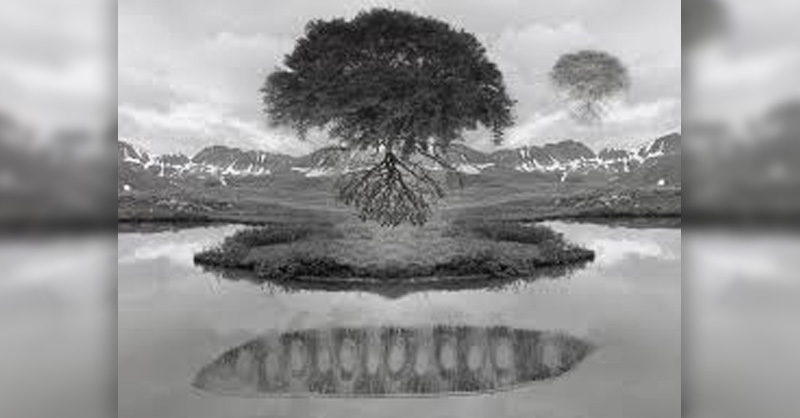
With today’s influx of digital artwork, composite and AI imagery, I find myself looking back at the work of one of my favorite artists, Jerry Uelsmann, a groundbreaking photographer who pushed the boundaries of what photography could be.
Long before Photoshop, Uelsmann was creating surreal photographs from multiple negatives in the darkroom. Landscapes merged with human forms. Trees grew from unexpected places. Interiors opened into entirely different worlds. His images are beautiful, strange, and often dreamlike. They look like work we might now assume was created digitally, but Uelsmann was producing them with enlargers, masks, careful exposures, burning, dodging, and an extraordinary understanding of photographic technique.
I learned traditional darkroom photography concurrently with digital photography and Photoshop, which gives me an enormous appreciation for what he was able to accomplish. I know what it takes to burn and dodge a relatively straightforward photograph. Creating a seamless composition from multiple negatives, while controlling how each individual exposure interacts with the others, requires an expert level of planning and skill.
Uelsmann’s technical skill is awe-inspiring, but so are the images themselves. His compositions are seamless, surreal, and often mesmerizing. He took a medium traditionally rooted in capturing something real and used it to construct scenes that existed only in his imagination. His knowledge of photography allowed him to push beyond the limits of what he could create.
Traditional artists, like Picasso similarly understood the value of learning the basics before challenging them. Picasso developed considerable skill in traditional drawing and painting before becoming known for his abstract work. He purposely broke the rules of painting, but in an intentional way, once he had mastered them.
That foundation is just as important when creating a photographic composite. Whether the work is being done in a darkroom or Photoshop, the individual pieces still need to work together. Lighting, exposure, perspective, scale, contrast, and composition all affect whether the final image feels believable, even when the scene itself is impossible.
Uelsmann referred to the darkroom as a “visual research lab where the creative process could continue.” The camera captured the individual photographs, but the negatives and the darkroom gave him the ability to experiment with what he had captured.
Photoshop eventually gave artists a much easier way to create the kinds of composites that would have been extraordinarily difficult in a darkroom. Artists then found ways to use Photoshop far beyond what it was originally designed to do. Now we’re working with AI, and we have yet to learn which boundaries can be pushed.
Knowing photography and compositing can also make someone better at creating with AI. It can inform how they construct a prompt or direct an image, but it also makes them more critical of the result. Instead of accepting an image because it looks impressive, they can identify what isn’t working and make more informed decisions about how to improve it, whether through manual adjustments or refined AI direction.
As AI-generated imagery becomes increasingly common, I also think there may be a growing appreciation for artists who create work by hand. While complex imagery can now be generated in seconds, looking at one of Uelsmann’s photographs and knowing that every element began with a camera and a negative makes the level of craft involved even more striking.
Jerry Uelsmann, Untitled, 1969. Gelatin silver print. Used for educational/editorial review under Fair Use.