
Learning a new language has traditionally felt like work. It meant textbooks, vocabulary lists, grammar drills, flashcards, and hours of memorization. Duolingo was not the first company to gamify language learning, but it took the idea further by creating an experience designed around short, approachable lessons and giving people reasons to return every day.
What stands out to me is how consistently the branding supports that approach. Duolingo does not look or feel academic. Its bright colors, friendly illustrations, playful animations, progress rewards, streaks, and game-like interface all reinforce the message that learning a language can be fun, manageable, and something you fit into a few minutes each day.
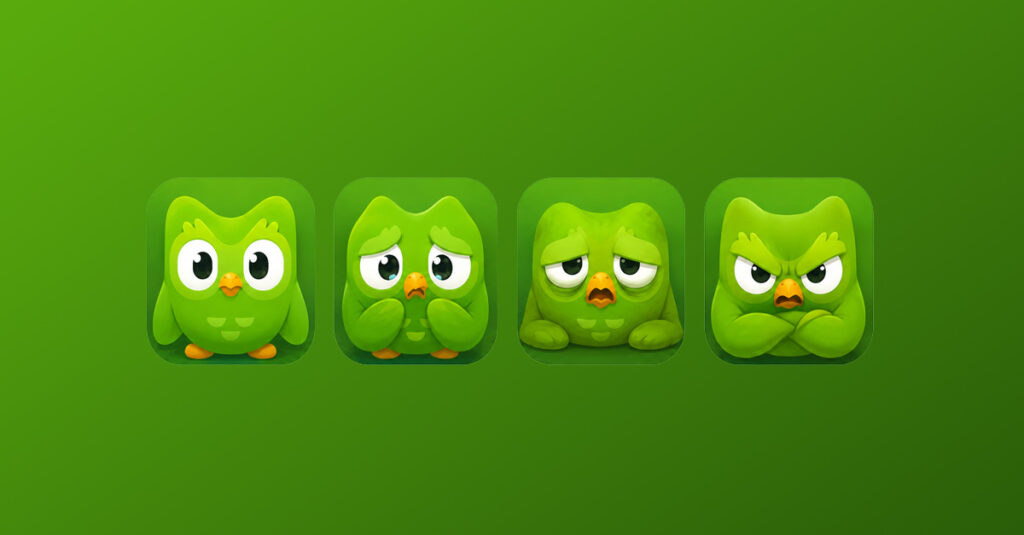
Then there is the owl, Duo. He is not simply a logo or mascot added to the interface. He has become part of the experience itself. When you have not opened the app for a while, the icon changes. Sometimes Duo looks sad, exhausted, frustrated, or increasingly desperate for your attention. I have seen several versions of the neglected owl, and each one piques my interest. More importantly, it often makes me want to open the app and make him happy.
That is a surprisingly effective use of visual branding. Most apps rely on generic reminders asking users to return. Duolingo uses a recognizable character, humor, and changing expressions to turn re-engagement into part of the brand experience. The reminder does not feel separate from the product because it belongs to the same playful world Duolingo has built inside the app.
The owl has a bigger purpose. His expressions support one of Duolingo’s biggest challenges by encouraging people to continue after their initial enthusiasm fades. The branding helps transform a reminder into an emotional interaction, even if that emotion is mild guilt delivered by a cartoon owl.
Branding is often discussed in terms of logos, typography, and color palettes, but its real value is in how those elements shape the experience people have with a product. Duolingo uses its visual identity not only to attract users, but to encourage them to keep coming back.
Companies are always seeking ways to re-engage customers. Duolingo found a way to make that question part of its brand. Sometimes all it takes is a disappointed green owl waiting on your home screen.