
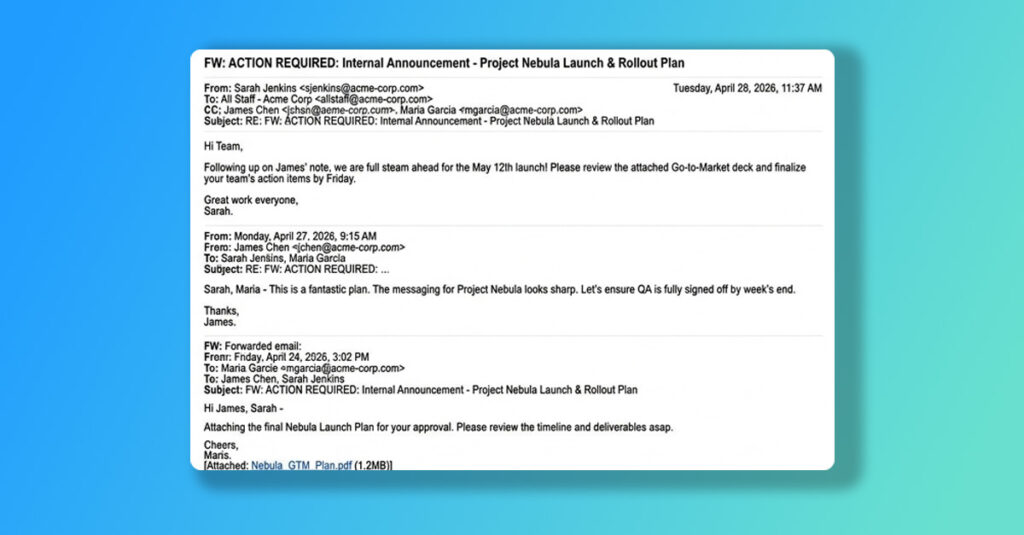
As a designer, I spend a lot of time thinking about visuals. Color, typography, photography, layout. The details that help a piece feel polished and intentional. So it might sound strange when I say that one of the most effective marketing emails I’ve ever received contained almost no design at all. No product photography, banner graphics, animated GIFs, or carefully crafted layout. Just text.
The email came from Oats Overnight and appeared to be an internal conversation about an upcoming product launch. Someone had replied to someone else. Questions were being asked. Details were being discussed. It looked as though I had somehow been accidentally copied on an email I wasn’t supposed to receive.
My first reaction wasn’t excitement, it was confusion. Why am I getting this? Then curiosity took over. What product are they talking about? What are they launching? Wait… am I supposed to be seeing this? By the time I realized it was a marketing campaign, it had already worked, I was hooked.
What made the email so effective wasn’t the design, it was the experience. It gave me the feeling that I was getting insider information. A sneak peek behind the curtain. Access to something before everyone else. It created curiosity, and curiosity is one of the most powerful tools in marketing.
The experience stuck with me because it challenged an assumption that many of us make as creatives. We often believe that standing out means adding more: more graphics, more animation, more polish, more visual impact, but sometimes the thing that gets noticed is the thing that breaks the pattern. In this case, a plain text email in an inbox full of highly designed campaigns. Standing out doesn’t always mean adding more. Sometimes it means doing something unexpected.
That doesn’t mean design isn’t important. Far from it. Good design communicates ideas, builds trust, and creates memorable experiences. But great marketing starts with understanding your audience and finding a compelling way to capture their attention.
This email engaged me and made me want to know more.
People don’t engage because something looks polished. They engage because something makes them feel curious, excited, surprised, understood, or inspired. It’s a reminder I keep coming back to in my own work. The visual execution matters. The idea is what gets remembered.